Showing posts with label drug use. Show all posts

Thursday, November 2, 2023

Report Finds VA’s Prescribing of Benzodiazepines to Homeless ‘Risky,’ ‘Inappropriate’

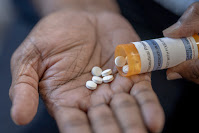
Homeless veterans with mental illness who use Veterans Affairs (VA) health services are less likely to receive prescriptions for benzodiazepines than those with mental illness who are not homeless, according to a report published this week in Psychiatric Services. When homeless veterans are prescribed benzodiazepines, however, they appear more likely than their peers to receive prescriptions that put them at risk for substance use disorder, overdose, and death, the study found.

Drug overdose is a leading cause of death among homeless people, and benzodiazepines are often implicated in such overdose deaths, wrote Katherine Koh, M.D., M.Sc., of Massachusetts General Hospital–Harvard Medical School and colleagues.

“Asking patients about whether and how they combine substances and counseling them about these risks should be part of clinical conversations about benzodiazepine prescribing,” Koh and colleagues wrote.

The researchers examined 2018-2019 national data from the VA, specifically focusing on benzodiazepine prescribing among 244,113 homeless veterans with mental illness and 2,763,513 veterans with mental illness who were not homeless. All veterans included in the study had a primary or secondary diagnosis of a mental illness, as determined by ICD-10 codes. Veterans were categorized as being homeless if they had used any VA homelessness program.

The benzodiazepines most frequently prescribed to veterans included lorazepam, clonazepam, alprazolam, and diazepam. The researchers found that 9.4% of veterans who were not homeless were prescribed benzodiazepines at the VA compared with 7.5% of veterans who were homeless—a difference that the authors noted was statistically significant. Other findings included the following:

  • Homeless veterans who sought VA care also had a higher rate of concurrent benzodiazepine prescriptions than those who were not homeless (9.4% vs. 7.0%).
  • Homeless veterans who sought VA care had a higher rate of concurrent prescriptions for benzodiazepines and opioids than those who were not homeless (36.9% vs. 31.2%), especially oxycodone (12.4% vs. 9.7%) and hydrocodone (13.9% vs. 12.3%) or sedatives (61.9% vs. 45.9%).
  • Of those with a benzodiazepine prescription, alcohol use disorder was more prevalent in the group who was homeless relative to the group who was not homeless (24.2% vs. 5.4%), as was drug use disorder (24.3% vs. 3.8%). (Drug use disorder was defined as a substance use disorder other than alcohol use disorder.)

“Structured approaches to the benzodiazepine conversation … may be useful for providers who find themselves in the dilemma of not wanting to prescribe benzodiazepines because of safety issues while striving to maintain a therapeutic alliance,” the authors wrote. This conversation should include nonpharmacologic strategies and interventions to treat conditions, such as anxiety or insomnia.

For related information, see the Psychiatric News article “M.D.s Call for Community Resources Amid Plans to Force Homeless Into Care.”

(Image: iStock/FatCamera)


Don't miss out! To learn about newly posted articles in Psychiatric News, please sign up here.


Tuesday, July 30, 2019

Wraparound Services Increase Benefits of Mental Health Courts, Study Finds


A program that offers integrated behavioral-health and criminal-justice services to individuals who are participating in mental health courts may help reduce recidivism and promote recovery among participants, a pilot study published in Psychiatric Services in Advance suggests.

Mental health courts divert people with mental health and/or substance use disorders who have been arrested from jail to court-monitored treatment referral and support.

Debra A. Pinals, M.D., of the University of Michigan Medical School and colleagues evaluated the impact of an intervention called Maintaining Independence and Sobriety through Systems Integration, Outreach, and Networking–Criminal Justice (MISSION-CJ) on individuals involved in a Massachusetts mental health court. MISSION-CJ offers a series of wraparound services including case management, in-community support, structured group treatment sessions designed to simultaneously treat co-occurring mental health and substance use disorders, peer support, vocational and educational support, trauma-informed care, and frequent coordination with probation officers.

A total of 97 mental health court participants who were found guilty in criminal court and who met criteria for a DSM-IV-TR axis I psychiatric disorder (for example, depression) and reported current or past substance use were included in the study. The researchers evaluated the participants using the Addiction Severity Index, the Behavior and Symptom Identification Scale-32, and the PTSD Checklist–Civilian Version at the start of the study and again six months later.

Participants were primarily male with an average age of 34, had spent an average of five years incarcerated, and had an average 14-year history of illegal drug use; 91% had experienced depression. The researchers found that after six months in MISSION-CJ, participants experienced a significant reduction in nights incarcerated, illegal drug use, trauma symptoms, and behavioral health symptoms.

The researchers acknowledged several limitations of the study, including the small sample size and the lack of a comparison group who did not receive MISSION-CJ.

Nonetheless, they concluded, “[T]his pilot study demonstrates that the MISSION-CJ intervention could be offered to mental health court participants … alongside the mental health court, with promising preliminary results. … Future studies comparing the effectiveness and cost-effectiveness of MISSION-CJ, usual mental health court processes, and any alternative interventions are needed to address the needs of this growing population.”

For related information, see the Psychiatric Services article “Improving the Evaluation of Adult Mental Disorders in the Criminal Justice System With Computerized Adaptive Testing.”

(Image: iStock/BCFC)

Friday, July 26, 2019

Meta-Analysis Hints at Benefits of Repetitive TMS for Treating Substance Use


Using repetitive transcranial magnetic stimulation (rTMS) to target a brain region thought to play a role in decision-making and self-control may reduce cravings and substance use in people with alcohol, nicotine, and illicit drug dependence, a meta-analysis in Addiction has found. During treatment with rTMS, electromagnetic coils placed against the scalp deliver magnetic pulses to stimulate a portion of the brain. 

“Although an anti-craving effect of rTMS intervention has been indicated by previous literature, the effect of different rTMS protocols on craving and substance consumption and the association between stimulation parameters and effect sizes has not been systematically investigated,” Jack J.Q. Zhang, M.Sc., of The Hong Kong Polytechnic University and colleagues wrote. 

Zhang and colleagues analyzed data from 26 studies published between January 2000 and October 2018 to determine which ways of using rTMS yield the best results for curbing cravings and substance use. The studies involved 748 participants with alcohol, nicotine, or illicit drug dependence and compared the effect of active rTMS with sham (fake) stimulation. Participants reported their cravings and substance use via tools such as questionnaires at various points in the studies. 

They found that stimulation of the left dorsolateral prefrontal cortex (DLPFC), located toward the top left side of the brain, significantly reduced cravings in participants who received active treatment compared with those who received sham treatment. Treatment of the left DLPFC appeared to be more effective in reducing cravings in participants who were dependent on illicit drugs (such as cocaine and heroin), than in those with nicotine or alcohol dependence. rTMS of the right DLPFC had no significant effect on cravings in participants who received active treatment compared with those who received sham treatment.

Treatment involving stimulation of the left DLPFC reduced substance use in participants who received active treatment, as well. Treatments involving bilateral stimulation (both the left and right) of the DLPFC and another part of the brain called the insula also curbed substance use. 

The researchers noted that the positive effects of rTMS appeared to be short-lived and often wore off by follow-up (on average, four months later). 

“Our results … highlight the need to optimize intervention parameters and to increase the durability of the anti-craving and consumption-reducing effects [of rTMS],” they concluded.

For related news, see the Journal of Neuropsychiatry and Clinical Neurosciences article “Outcome of Non-Invasive Brain Stimulation in Substance Use Disorders: A Review of Randomized Sham-Controlled Clinical Trials.”

(Image: iStock/Hank Grebe)

The content of Psychiatric News does not necessarily reflect the views of APA or the editors. Unless so stated, neither Psychiatric News nor APA guarantees, warrants, or endorses information or advertising in this newspaper. Clinical opinions are not peer reviewed and thus should be independently verified.