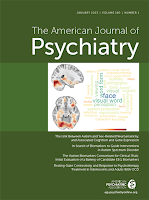
At the end of each year, members of the American Journal of Psychiatry (AJP) Editorial Board select the studies they found particularly impactful in the previous 12 months. The nine studies selected for 2022 have expanded the understanding of the impact of stress hormones on brain development, revealed new insights into how and when the brains of infants who go on to develop autism diverge from their peers, exposed the long-term cognitive effects of cannabis use, and more.
“There were outstanding papers selected this year that showcase some of the cutting-edge tools and ideas … in psychiatry,” said Ned Kalin, M.D., AJP editor-in-chief and the Hedberg Professor and Chair of Psychiatry at the University of Wisconsin School of Medicine and Public Health.
Kalin’s selection was the study that utilized brain organoids to assess how stress hormones, such as cortisol, affect brain development. “We know that early life stress is a very large risk factor for psychiatric illness later in life,” he said. “Cerebral organoids are like living test tubes that enable researchers to recreate these aspects of these early life stressors and observe how developing neurons are impacted.”
Other 2022 editors’ picks included the following:
- A clinical trial of a new protocol for transcranial magnetic stimulation that obtained impressive results in only five days for patients with treatment-resistant depression. The protocol, named the Stanford Accelerated Intelligent Neuromodulation Therapy (SAINT), was subsequently cleared for use by the FDA.
- A brain imaging study that revealed that the brains of children with autism spectrum disorder appear to diverge from other children between 6 and 12 months of age, pointing to a key period when early intervention may have a strong impact.
- A longitudinal study tracking more than 1,000 individuals from age 3 for 40 years in New Zealand that found that chronic cannabis users had more significant declines in processing speed, memory, and attention over their life than non-cannabis users. Long-term cannabis users also had greater declines in these cognitive areas compared with long-term drinkers and smokers.
- AJP Residents’ Journal editor Danielle W. Lowe, M.D., Ph.D., spotlighted two articles on transgender care from a special thematic issue in 2022 on minority mental health and the importance of respecting patient identity. The articles included a case report highlighting the impact of gender dysphoria on the development of eating disorders and a piece on improving dialogue with transgender patients to reduce discrimination and stigma.
To learn more about these and the other selected studies, see the Psychiatric News article “2022 AJP Editors’ Picks Showcase Innovation, Long-Term Studies” and the AJP article “2022 Articles of Import and Impact.”
Voting Opens Today for APA’s 2023 Election
APA invites all APA voting members to participate in its 2023 election. Please take the time to learn about the candidates and cast your ballot. Your vote has an impact on the future of APA and psychiatry.